Study Objective: To evaluate the real-world impact of postoperative analgesia with liposomal bupivacaine (LB) on healthcare resource utilization, costs, and opioid prescription refills following outpatient TKA procedures in ASCs
This was a retrospective analysis of adults undergoing TKA between January 2019 and November 2022 at an outpatient ASC identified from the IQVIA New Data Warehouse. Patients were divided into two cohorts based on EXPAREL use on the date of TKA; 1:1 propensity score matching was used to create balanced cohorts. Propensity score matching variables included age group, geographic region, payer type, year of index date, CCI categories, chronic kidney disease, diabetes, osteoarthritis, opioid use on the index date, and all-cause total outpatient day-of-surgery medical costs. The final propensity score-matched cohort included 2,307 EXPAREL patients and 2,307 non-EXPAREL patients. Baseline characteristics were well balanced between groups (SMD <0.10), with an exception for geographic region.
Limitations: This retrospective study is subject to confounding factors that may have changed at the ASCs from 2019 to 2022. The study period overlapped with the expanded indication of EXPAREL and could not account for additional clinical and economic benefits. Claims data were collected for payment purposes and may not be representative of accurate diagnoses and treatment due to coding issues. Heterogeneity in practice patterns may not be accounted for because the study design did not assess surgeon techniques or institutional protocols that can influence pain control and costs.


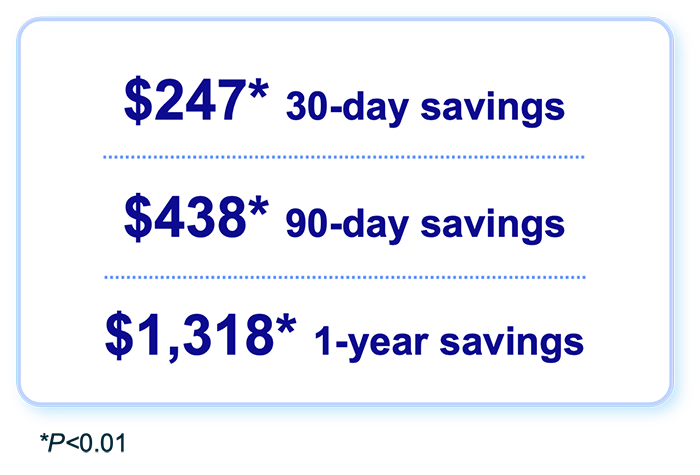
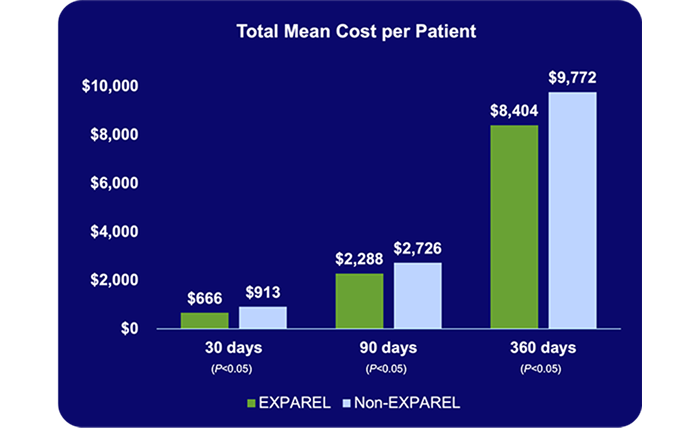
Lower costs of care with EXPAREL vs non-EXPAREL analgesia were seen as early as 30 days after surgery, leading up to a 14% lower cost at 1 year postsurgical follow-up ($8,404 vs $9,722; $1,318 lower).
Cost differences were driven by a decrease in physical and occupational therapy visits.
Limitations: Clinical outcomes beyond claims-based measures (ie, functional recovery, patient satisfaction, opioid-related AEs) were not measured and limit understanding on the analgesic’s effectiveness at large. Findings may not be reflective of favorable pricing agreements for ASCs because the database used cannot capture variation in site-level purchasing contracts or institutional pricing structures. Additionally, the database did not include data on patient activity at physician offices, pharmacies, and hospitals.
AE, adverse event; ASC, ambulatory surgical center; CCI, continuous catheter infusion; SMD, standard mean difference; TKA, total knee arthroplasty.
References: 1. Lin J, et al. J Arthroplasty. 2025:1-9 doi:10.1016/i.arth.2025.10.018
Indication
EXPAREL® (bupivacaine liposome injectable suspension) is indicated to produce postsurgical local analgesia via infiltration in patients aged 6 years and older and regional analgesia in adults via an interscalene brachial plexus nerve block, sciatic nerve block in the popliteal fossa, and an adductor canal block. Safety and efficacy have not been established in other nerve blocks.
Important Safety Information
Warnings and Precautions Specific to EXPAREL
Warnings and Precautions for Bupivacaine-Containing Products
Please refer to full Prescribing Information.

